







Golden Triangle Tour: Delhi, Agra and Jaipur
Your simple, honest guide to India’s most popular trip. See the Taj Mahal, Mughal forts and royal Rajasthan palaces in 3 to 7 days, with real costs and no confusing jargon.
What is the Golden Triangle Tour?
The Golden Triangle Tour is a trip that connects three cities in North India: Delhi, Agra and Jaipur. On a map they form a rough triangle. The full loop is about 720 to 750 km, and most people finish it in 3 to 7 days by private car, train, or small group. It’s the easiest way to see the Taj Mahal, Mughal forts and Rajasthan’s royal palaces in one trip.
If you’re visiting India for the first time, this is the route most people pick. The roads are good, planning is simple, and every city adds something different: history, food, shopping and great photos.
How far are the cities from each other?
Here are the usual drive times. Traffic, weather and stops can add an hour or two.
Via the Yamuna Expressway, a smooth, fast road.
Stop at Fatehpur Sikri on the way. It’s worth it.
Leave early to miss the city traffic coming back.
You can also take a train from Delhi to Agra. The Gatimaan Express is the fastest and takes under 2 hours. Many travelers take the train one way and a car for the rest.
How many days do you need?
Short answer: 5 days if you want to enjoy it, 4 days if time is tight.
Fast and tiring
You’ll see the main sights, but you’ll spend lots of time in the car. Only if you have no other choice.
Good balance
One full day in each city plus travel time. A solid choice for busy people.
Relaxed and complete
A proper day in Delhi, a calm Taj Mahal visit, and enough time for Jaipur’s forts and markets.
Slow and deep
Add Pushkar, Fatehpur Sikri or a Ranthambore tiger safari, and take it easy.
Golden Triangle itinerary, day by day
Start with our recommended 5-day plan below. Tap the other plans if you have fewer or more days.
Recommended: 5-day Golden Triangle itinerary
Arrive in Delhi
Rest, check in, and keep the evening easy. A short walk around Connaught Place or Khan Market is enough after a long flight.
Full day in Delhi
Start with Humayun’s Tomb in the morning, then see Qutub Minar and India Gate. After lunch, visit Red Fort and walk through Chandni Chowk for street food. Old Delhi is crowded, so go with a guide or someone who knows the lanes.
Delhi to Agra
Leave by 7 or 8 am and reach Agra around lunchtime. Visit Agra Fort first, then Itimad-ud-Daulah (often called the Baby Taj). Go to the Taj Mahal in the late afternoon for soft light. Stay overnight in Agra.
Agra to Jaipur
If you didn’t see the Taj at sunrise, do it now. It’s quieter and cooler. Then drive to Jaipur with a stop at Fatehpur Sikri, a red sandstone city built by Emperor Akbar. Arrive in Jaipur by evening and try dinner at a rooftop or a local thali place.
Jaipur and return
Go to Amber Fort early, before the crowds. Then visit the City Palace and Jantar Mantar (a UNESCO World Heritage Site), and take photos at Hawa Mahal. Shop in the bazaars if you have time. Drive back to Delhi in the evening, or stay another night.
3-day Golden Triangle itinerary (fast version)
Day 1: Delhi to Agra. Start early and drive to Agra. Visit Agra Fort and watch the Taj Mahal at sunset if you can. Stay overnight in Agra.
Day 2: Agra to Jaipur. See the Taj Mahal at sunrise, then drive to Jaipur. Stop at Fatehpur Sikri on the way. Reach Jaipur by evening.
Day 3: Jaipur and back to Delhi. Visit Amber Fort and the City Palace in the morning. Drive back to Delhi in the afternoon.
Old Delhi is skipped on this plan. If you land in Delhi a day early, use that day for Old Delhi.
4-day Golden Triangle itinerary
Day 1: Delhi. Humayun’s Tomb, India Gate, and a walk through Old Delhi if there’s time.
Day 2: Delhi to Agra. Drive down, visit Agra Fort, and see the Taj Mahal at sunset.
Day 3: Agra to Jaipur. Taj Mahal at sunrise. Then Fatehpur Sikri, then on to Jaipur.
Day 4: Jaipur. Amber Fort, City Palace and Hawa Mahal. Fly or drive back to Delhi.
7-day Golden Triangle itinerary
Use the 5-day plan and add:
- One more night in Jaipur for Nahargarh Fort, Jal Mahal, and cooking classes or local craft workshops.
- Pushkar (about 2.5 hours from Jaipur) for its sacred lake and relaxed pace.
- Ranthambore National Park for a tiger safari, a favorite add-on.
Top places to see in each city
You can’t see everything. These are the places that are worth your time.
Delhi
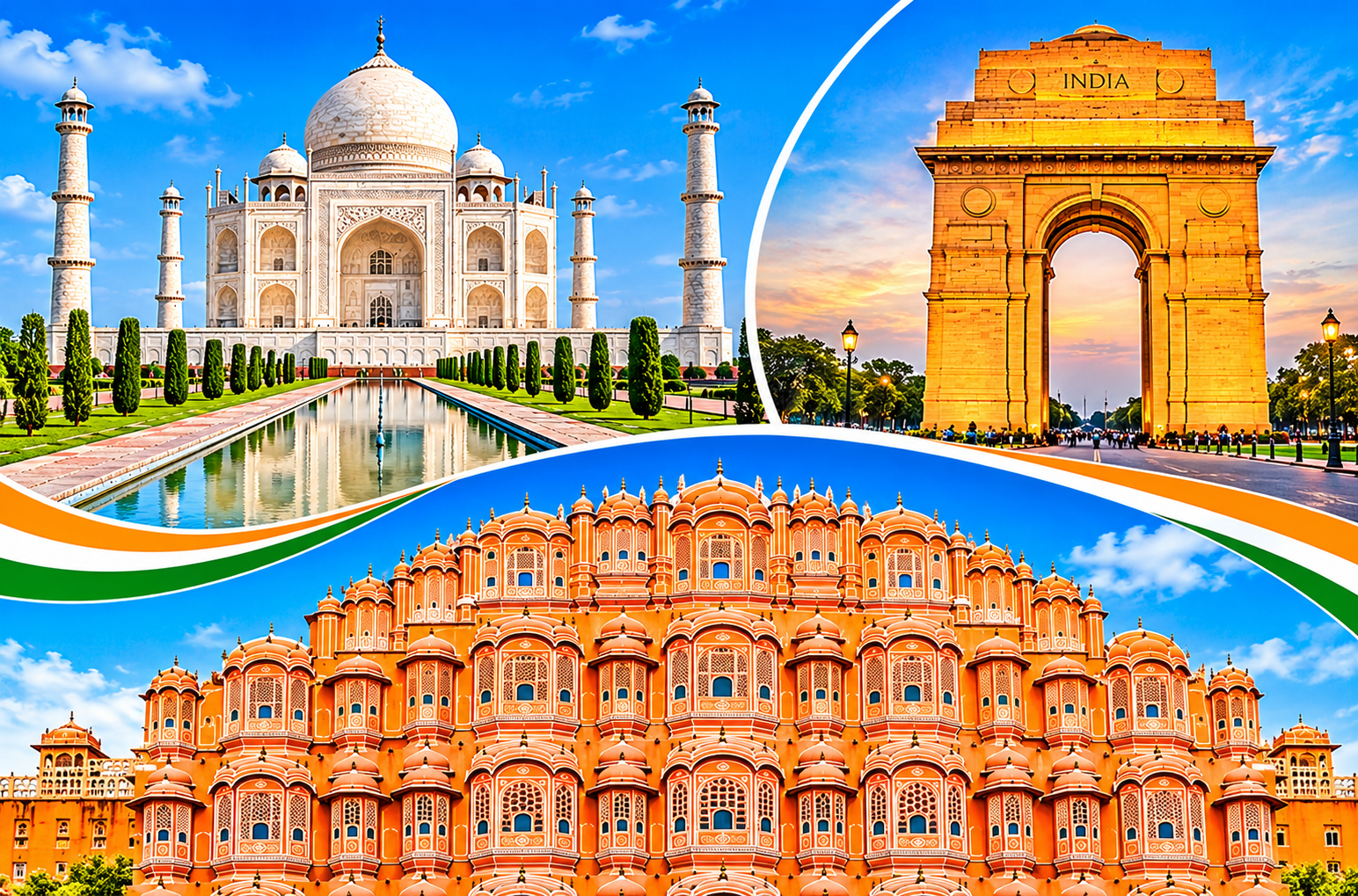
The capital: old and new side by side- Humayun’s TombA UNESCO site and the model for the Taj Mahal. Calm and great for photos.
- Red FortThe big Mughal fort in Old Delhi, also a UNESCO site.
- Qutub MinarA tall 13th-century tower with carved walls.
- India Gate and Rajpath areaAn easy photo stop, best in the evening.
- Chandni ChowkCrowded, loud and fun. Come hungry.
- Lotus Temple and AkshardhamGood if you like modern architecture and have a spare half day.
Agra
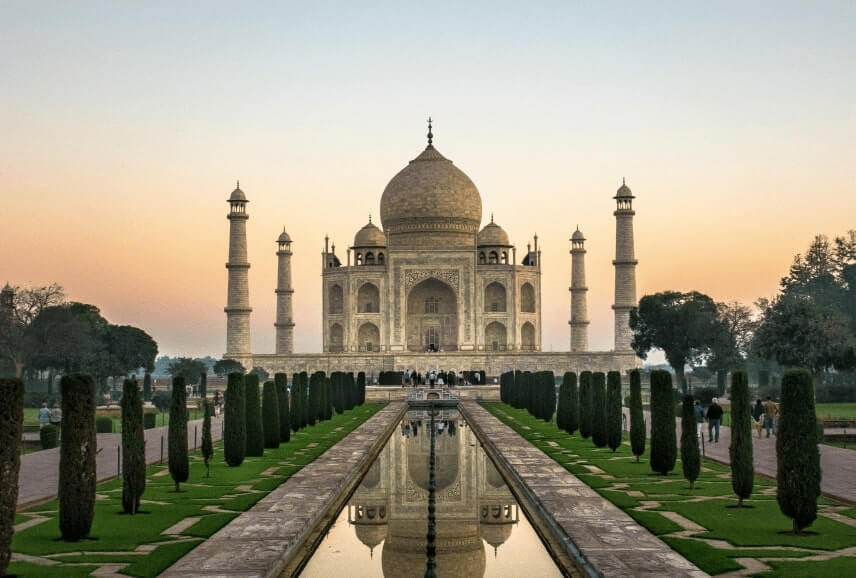
Home of the Taj Mahal- Taj MahalBuilt by Emperor Shah Jahan for his wife Mumtaz Mahal. White marble, perfect symmetry, and worth the hype.
- Agra FortA huge red sandstone fort. You can see the Taj from inside.
- Itimad-ud-DaulahA smaller marble tomb with fine inlay work. Quiet and photogenic.
- Mehtab BaghA garden across the river with a back view of the Taj. Great at sunset.
- Fatehpur SikriAbout 40 km away. An old Mughal capital that was left empty. Visit on the way to Jaipur.
Jaipur
The Pink City of Rajasthan- Amber FortThe star of Jaipur. Walk up early, or take a jeep.
- City PalacePart museum, part royal home. Look at the courtyards and gates.
- Hawa MahalThe pink “Palace of Winds.” You mostly see it from outside, and the best view is from a cafe across the road.
- Jantar MantarA giant stone observatory from the 1700s.
- Jal Mahal and Nahargarh FortGreat views, especially near sunset.
- BazaarsJohari Bazaar for jewelry, Bapu Bazaar for textiles and shoes.
Best time to do the Golden Triangle Tour
October to March is the best time. Days are mild, nights are cool, and sightseeing is comfortable.
Golden Triangle tour cost (2026)
Prices change by season, hotel level and group size. These are rough ranges per person, based on what many operators currently list. Always ask what’s included before you pay.
Fast trip. Price depends mostly on hotel level.
Popular mix of price and sightseeing.
Our recommended length. Luxury hotels cost more.
You’ll see very low prices on some websites, like $50 to $170. These are usually for a car and guide only, with no hotel or no entry tickets. Check the fine print.
What changes the price
- Hotel level: 3-star, 4-star, 5-star or heritage palace
- Car type: standard AC car, sedan, SUV or minivan
- Guide: shared, private or no guide
- Group size: more people per car means a lower cost each
- Season: December and January are the most expensive
- Extras: monument tickets, lunch, tuk-tuk rides, elephant-free Amber Fort jeeps and show tickets
What a good tour should include
- Hotel stays with breakfast
- Private AC car with driver, including fuel, tolls and parking
- A licensed English-speaking guide (or your language, if available)
- Airport or station pickup and drop
- Bottled water in the car
- A clear list of what is not included, such as entry tickets, lunch and dinner
Taj Mahal tickets, timings and rules
This is where many travelers make mistakes, so read it twice.
- Timings: It opens about 30 minutes before sunrise and closes about 30 minutes before sunset.
- Foreign visitor ticket: About ₹1,100 for entry, plus ₹200 for the main mausoleum, so around ₹1,300 in total. Indian citizens pay about ₹50 plus the same ₹200 for the mausoleum. Children under 15 enter free.
- Agra Fort: About ₹650 for foreign visitors and ₹50 for Indians. It’s a separate ticket. There is no combined ticket with the Taj Mahal.
- Book online. It saves time and helps you avoid the longest ticket line.
- Night viewing: Only five nights a month around the full moon, in small slots, and not on Fridays. Tickets are limited.
Prices are set by the Archaeological Survey of India and do change. Confirm on the official Taj Mahal website before you go.
Closed every: Taj Mahal is shut to general visitors on Fridays, apart from prayers at the mosque. Plan to be in Agra on any other day
How to travel: car, train or group tour?
All three work. The right one depends on your budget, your time and who you’re traveling with.
Private car with driver
The most popular choice. You set your own pace, stop for photos, and never carry luggage on and off trains. A good fit for families, couples and anyone who dislikes crowds.
Train plus car
Take the fast Gatimaan Express from Delhi to Agra, then a car to Jaipur and back. It saves a few hours and some money. Book train tickets early, because the best seats sell out.
Small group tour
Cheaper per person and good for solo travelers who like meeting people. The downside is a fixed schedule, so you can’t linger.
Where to stay
- Delhi: Stay near Connaught Place, Aerocity (close to the airport) or South Delhi. Avoid places far from the metro unless a car is included.
- Agra: Pick a hotel near the Taj area or on Fatehabad Road. Taj-view rooms cost more, so decide if the view is worth it.
- Jaipur: The Old City and C-Scheme are the best areas. Heritage havelis give you a real Rajasthani feel without a palace price.
What to eat on the way
- Delhi: Butter chicken, chole bhature, parathas, and chaat in Chandni Chowk.
- Agra: Petha (a soft sweet made from ash gourd), bedai with aloo sabzi for breakfast, and Mughlai dishes.
- Jaipur: Dal baati churma, laal maas, ghewar (a honeycomb sweet) and lassi.
If you have a sensitive stomach, drink only bottled or filtered water and pick busy restaurants where food is cooked fresh.
12 tips that save time and money
Small things that make a big difference on the road.
- Check the day first. Don’t plan the Taj Mahal for a Friday.
- Start early. Be on the road by 7 am to dodge city traffic.
- Go to the Taj at sunrise. It’s cooler, quieter and the light is better.
- Dress for the place. Light cotton clothes that cover your shoulders and knees are best, and they respect local customs.
- Carry small cash. For tips, snacks and small entry fees.
- Ignore “free” shop stops. If a driver or guide pushes you into a gem, carpet or marble shop, you can say no. You’re not obliged to buy anything.
- Use a licensed guide. Ask to see their ID card. A good guide makes the forts far more interesting.
- Book early for hotels and trains between October and February.
- Keep bags light. Taj Mahal security won’t allow many items, including large bags, tripods and food.
- Add buffer time. Traffic can be slow, so don’t plan back-to-back stops.
- Carry a power bank. You’ll take more photos than you think.
- Check your visa early. Many visitors can apply for an e-visa online. Rules change, so confirm on the official Indian government visa site.
Common mistakes first-timers make
- Trying to cover too much in 2 days
- Booking the wrong day for the Taj Mahal
- Choosing a very cheap package that hides extra costs
- Visiting in peak summer with no energy left to walk
- Skipping Fatehpur Sikri because it “looks like another fort”
- Not asking whether entry tickets are included
How to choose a good tour operator
- Read recent reviews on at least two websites
- Ask for a clear day-by-day plan in writing
- Ask what is included and what isn’t, especially entry tickets and meals
- Check cancellation and refund rules
- Ask about the car type and age
- Check that the guide is government-licensed
- Make sure you can reach someone by phone or WhatsApp during the trip
Golden Triangle tour from other cities
Most tours start and end in Delhi. If you live elsewhere in India, fly into Delhi, join the tour, and fly home from Delhi or Jaipur.
Some operators sell “Golden Triangle with flights” packages for these cities. Compare the price with booking flights yourself. Book early for festival weeks. Flying into Delhi and out of Jaipur can save you a day of driving.
Popular add-ons
Frequently asked questions
Quick answers to what most travelers ask before booking.
What is the Golden Triangle Tour in India?
It’s a popular travel route through Delhi, Agra and Jaipur. The three cities form a triangle on the map. It covers the Taj Mahal, Mughal forts and Rajasthan’s royal palaces.
How many days are enough for the Golden Triangle?
Five days is enough to see the best of each city without rushing. Four days works for a faster trip. Three days is the minimum.
What is the best time to visit the Golden Triangle?
October to March. The weather is cool and dry, which makes sightseeing comfortable.
How much does a Golden Triangle tour cost?
Most 3 to 5 day tours cost roughly $230 to $540 per person, depending on the hotel level and what is included. Luxury and heritage hotels cost more.
Is the Taj Mahal open every day?
No. It’s closed on Fridays. It is open on all other days, including most public holidays.
How far is Agra from Delhi?
About 230 km. By road it takes 3.5 to 4 hours. The Gatimaan Express train takes under 2 hours.
How far is Jaipur from Agra?
About 240 km, or 4.5 to 5 hours by car. Many travelers stop at Fatehpur Sikri on the way.
Can I do the Golden Triangle by train?
Yes. Trains run between all three cities. Many people take the train between Delhi and Agra and use a car for the rest, because it’s faster and easier.
Is the Golden Triangle good for first-time visitors?
Yes. It’s the most common first route in India. Roads are good, hotels are easy to find, and guides are available at every major sight.
Is the Golden Triangle suitable for families with kids?
Yes, but keep the days short. Long drives are tiring for children. A 5 or 6 day plan with a private car works best.
Do I need a guide?
A guide isn’t required, but it helps a lot at Agra Fort, Amber Fort and Fatehpur Sikri, where the history is hard to follow alone.
Can I add Varanasi, Ranthambore or Udaipur?
Yes. These are popular add-ons. Ranthambore is the most common because it’s close to the main route.
Ready to plan your Golden Triangle trip?
The right day for the Taj Mahal, an early start and a sensible number of days will change how the trip feels. [Your Company Name] can build a plan around your dates, budget and pace. Tell us your arrival day, number of travelers and hotel level, and we’ll send a clear price with a day-by-day plan.